
Here’s everything I’m actually doing right now to keep my family’s memories, and where I still have gaps.
For this episode, my first with a guest, I sat down with her to talk about all of it: what memory-keeping looked like when I was growing up, how her own approach has changed since, and something she does now that I didn't expect. She works part-time for a friend who's a fiduciary trustee, and every so often that means helping clean out a client's home after they've passed. She's seen firsthand what happens to a lifetime of photo albums when there's no one left to want them — and it's changed how she thinks about her own.
What we cover
Why twenty thousand photos on my phone made me rethink the whole thing
The four categories I sort every memory project into
Using a physical trunk as a constraint — and much cheaper ways to do the same thing
Three albums, two hundred photos each, covering birth through eighteen
How I choose which photos make it in (it isn't the ones you'd expect)
What stays in front of us every day: digital frames, magnets, prints
Monthly Chatbooks, and why monthly works better for me than yearly
The video problem I haven't solved, and the workaround I'm using
Why I lost every photo I had once, and what I do differently now
-
Hey, welcome to Postcards for Posterity — make the memories, keep the story. I'm Maddie, and this show is for moms and anyone who takes the pictures and holds the stories in their families, but doesn't want to miss their life while trying to document it.
Quick note before I start today: I mention a bunch of specific products in this episode. Some of those links in the show notes are affiliate links, which means I may earn a small amount if you buy through them. Everything I'm talking about today is something I actually use.
Why I Needed to Change Something
I want to talk about my actual memory-keeping system. Not the version where everything's figured out — just what I'm really doing right now, including the parts I haven't solved.
I think the reason I started this whole thing, the blog and the podcast, was that I was so overwhelmed. My daughter is four now, and somewhere in there I just realized that what I was doing wasn't going to work for the rest of her life.
It's not that I don't enjoy it — I actually really do, and that's the problem for me, honestly. I couldn't picture keeping up at that pace. I was just making more and more things and taking more and more pictures. And I looked at my phone with over twenty thousand images, and I didn't even want to go through it, and I didn't know where to start.
It also made me feel like, if I don't want to go through it, when or why would she? I felt like it would be overwhelming for her too. I don't think she's going to sit down and go through twenty thousand photos, and I don't think most of us would, because it does take time and intention and work.
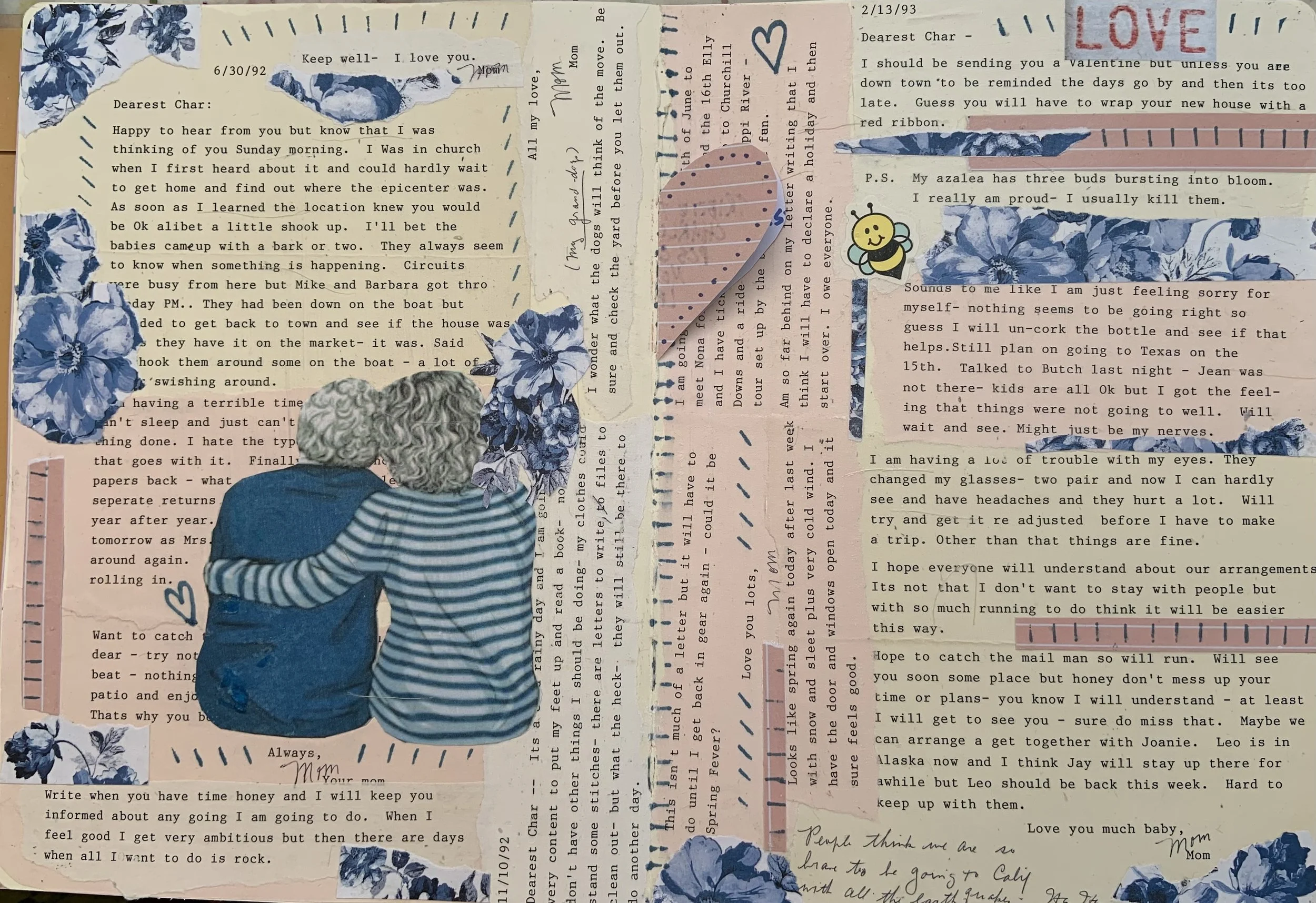
I think we overestimate how much someone really cares about our daily photos. Is that a hot take? I don't know. But it took me years to even go back and read my own journals, and when I finally did, it took so much time just to get through them and pull anything meaningful out. And that was my own life, in my own handwriting.
The other thing — and this one's harder to say — is that I was observing instead of being part of it. Honestly, I love being behind the camera in a lot of ways. I love documenting, and I feel really comfortable there. But I wanted to challenge myself to be in the moment and experience it in different ways, instead of always taking the photo and outsourcing that memory to my camera roll.
I think underneath all of what I do is a fear of not remembering, and a desire to remember everything, all of these experiences. It makes it feel more meaningful to me, and having the photo does help with that, or the video. But it was becoming pretty clear that I was taking myself out of the thing I was trying to hold onto.
I still do that sometimes. But I did start practicing doing it less, and I'm still figuring it out, really.
The Four Categories
Here's where I've landed so far. What helped most was realizing that not everything I'm making is for the same reason. I started sorting it into four different categories, or questions.
What's happening right now, in the moment?
What do I want in front of me — around the house, part of our every day?
What am I making for me, or for us as a family?
And then, what does she take with her when she leaves one day? What outlasts me?
All of those turned out to be completely different jobs. The thing that works for one is the wrong tool for another.
Once I separated them out, a lot of pressure came off, because I stopped trying to make every photo do all four things at the same time. It helped me be more intentional about where what I was documenting was going, and about creating a better system for the goals I wanted to achieve — whether that was reminding us of our current memories and our family stories on a daily basis at home, or photo books that she would have in the future.
For What They Take With Them
This is about what she takes with her — and this is my daughter, so obviously it could be your son, or any child.
This is the one I've thought about the most, honestly, because for a while I was telling myself that everything I was doing was for her. The monthly Chatbooks, all the photos and the videos — it felt like, oh, she'll have this forever.
And even though I think at the end of the day a lot of it is for me, separating them helped me figure out what she's actually going to get at the end of this, and how I was going to be part of that.
The Trunk as a Constraint
So I knew I wanted a literal constraint. Something physical that would make the decision for me a bit. And I ended up finding Petite Keep.
They make handmade trunks and chests, and you can get a name embroidered on it and a birth date, choose your fabric. It's definitely an investment, I'll say that upfront. And I want to be honest about the shopping part, because when I was looking, I noticed there are a lot of trunks on Facebook Marketplace for way, way less.
So this isn't me saying you need this specific trunk. But I do really appreciate the quality of Petite Keep. If the price feels high — I think they're about $400 — there are a lot of other options.
The reason I went with it is that I wanted something light enough that I could physically carry it out if there was a fire or some kind of natural disaster. And they're pretty light. They kind of look heavier than they are. It gets heavier as you put things in it, obviously, but I could grab it and pick it up.
There are other ways to do that, though. You could get a fireproof trunk. You could put things inside a fireproof bag and then use a sturdier trunk that just lives in a bedroom. Frankly, a large suitcase would work. The main thing isn't the object — it's having some kind of container that has a limit to it, and being cognizant of protecting the things you put in it that you want to last a long time, so there's no water damage or mold damage or anything else.
The trunk is really my constraint. Anything that doesn't fit in it has to go, or I have to slim something down. And it does hold a lot.
What's In the Trunk
So right now, what's in there is the yearbook I made for her first year, which took me about eight hours. I remember that clearly. I was so proud of it when I was done — but again, these things take so much time. The little mini books I made from her first year, and from my pregnancy.
I recently got a School Years book, now that she's starting school, where I can put in her school picture. It has a little slot for artwork or papers or things I want to keep from that year. And then at the end of every year, I can ask her a few questions about where she's at, and do it again the next year.
I also have a folder for her artwork. That's a separate thing right now, but she makes so much artwork — she makes me something every day at school. And it's the cutest thing, because she knows her letters now, and the way she spells "mommy" is M-O-M-E. I just love it, and I love getting that.
So I try to figure out what kinds of things I want to keep, so I can show her evolution and remember some of those details. Like how she spells "mommy."
Three Albums, Two Hundred Photos Each
The thing I'm most excited about is a photo album I bought from Rifle Paper Company. It holds 200 photos, and I ended up buying three of them.
This was actually inspired by a conversation I had with a friend, who pointed out that if she made a scrapbook for every year of her kid's life, she would have eighteen scrapbooks. And that just felt like a lot. I agreed — that would be a lot to take with you. Where do you put that?
Even if my mom handed me eighteen scrapbooks, I'd be like, I don't know. That's really cool, but I don't know where to put it.
So I went with what she was thinking, which is one book every six years, and that covers through their eighteenth birthday.
I bought all three up front so they'd be consistent and have the same design. I also like that this particular product has room to write a story or a note about the photo next to it. I think there's also opportunity to write things on the back of the photo.
I like too that it's a physical photo book, so she could take a photo out in the future, photocopy it, change it out if she wants — just do something with it.
The downside is that if you do the math, every year I have to narrow it down to about thirty photos. When you think about how I grew up, thirty photos a year is actually pretty good. Two photos a month with an iPhone camera that you're taking one with every day — that does feel like a lot. Or if you have a vacation, how do you sort that out? I'm still working through that and narrowing down those photos right now.
I'm in the process of doing that first batch, from one to four years, and just getting it in my head what this really looks like. But I like that challenge, because it makes me think about what the most important narratives or stories or memories are from each year — the ones I really want her to have, and to pass down and remember.
And in that vein, starting to go through her first year, I found that my criteria for picking photos isn't exactly what I expected. It's not necessarily the ones I look back on the most, and it's not even really the ones that bring me the most joy. It's the ones with the most meaning, where there's a story I could write next to it.
So it becomes two hundred stories, essentially. Some of them won't be — I'll put some favorites in there too. But I'm trying to be intentional that the photo isn't just a cute or pretty picture, that it has some context to it.
I also put some clothes in there, cards she's been given, and I'll include a USB drive with more photos. Still edited down, because there's no way she's going through everything.
I'm the first photo editor. And as she gets older, I hope she can help me with it, because these are her memories and I'd rather she be part of picking them. But for now, I'm the designated person.
What's In Front of Us Every Day
So going from that to what's in front of us now, what we experience every day — the product I really love is the Aura Frame.
If you haven't heard of it, it's basically a digital frame. It has an app, you can load up all the photos you want on it, and you can set a timer for how long each photo appears. And I love it. Sometimes when you put pictures on a wall — which I still love — they do become part of the background after a while.
We've had this Aura Frame for a few years now, maybe even four years. My dad and stepmom gave it to us as a present. Best present. And it's been so fantastic, because even my daughter will go up and look at the photos and slide through them. And in the app, you can easily add to other people's frames.
So I've bought one for my grandparents, my dad and stepmom already have one, my mom has one — and any time I have some cute photos to share with them, I'll add them to the frame.
My husband's grandparents actually have a different frame, the Skylight. Skylight has a digital frame as well, and I think it integrates with their calendar. That one seems good — that's another good option, especially if you have the other products they sell. But I do really like the interface of the Aura a bit better, to be honest.
We just recently went to Hawaii, and I was able to update it immediately with the photos from there. It's just a fun way for them to see what we're doing. And in the app you can comment on photos, which is really fun. And it's all private, which is also nice.
The other thing I keep around us is just family photos, frames. I used Mixtiles recently for some of the larger photos we put on the wall, and they make such a huge impact. They were so easy to put up. I am such a fan — I saw them on social media for years and thought, maybe one day. Easiest thing.
I think the only downside is that you get so many promo emails afterward. But I really love their product, frankly.
And then we also have Social Print Studio mini book magnets that I love, on the fridge. I need to make a new set of those.
And then the View-Master — the 3D image. You can buy the View-Master and then make multiple image reels for different occasions, and there's a little holder I bought as well.
These little moments are things that are interactive and engaging, and something I've seen my daughter actively engage with. I love that. It makes it feel like the memory is alive.
What I Make for Us
This is probably the thing that's a little more overboard, in a way. But I do love the monthly Chatbooks.
I was thinking I would give it up this year, and maybe I will eventually. But right now, I'm just not great at journaling every day — I'm really trying to do more of that. The monthly Chatbooks just feel so easy to me.
I love being able to select up to sixty photos for that month and put them in a book. The book is small and flexible, and it's $10, so it's cheap enough that if my daughter is playing with it and bends it or ruins it, it's easy to order a new one. And I don't care as much.
They're lined up in her room right now, but I think eventually we'll put them in a family bookcase or something.
I also use Canva to write a one-page summary of what happened that month. And you can write little comments on the photos as well. For me, it feels like my journal for the month. It really only takes me about an hour.
I feel like if I did a yearly book, I would forget so much by the end of the year. So I do the monthly books for now.
Then I did a five-year anniversary book for my husband and me, and I really liked having that span of time — it makes it a little easier to narrow down and select photos. I do plan to do a family album every five years. That's more of a digital, printed family album.
I also use Chatbooks for vacation books, because they're the same size and, again, easy and fun. For that five-year album, or for higher-quality things I want to last a long time, I use Artifact Uprising. So I might switch vacation books in the future if I start moving away from Chatbooks — but I just love the system I have with them.
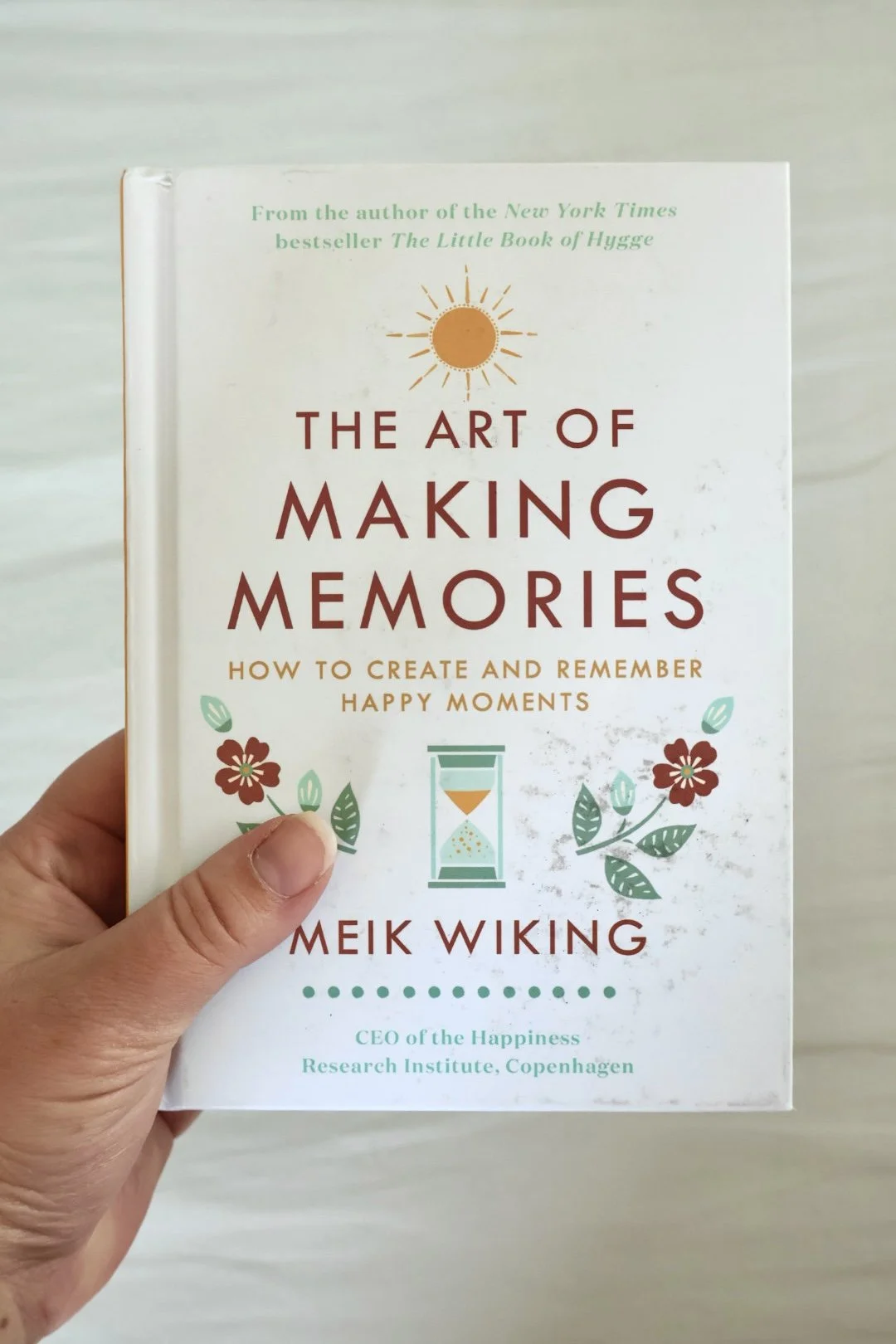
The other product I've come across recently is called The Keeping Book. It's like a journal, but a family journal, and it has each day of the year. It doesn't have a year listed — you write in the year, and you write a memory from that day. So this book may last at least a few years, if not more.
I tend to write so much, but I just love that it gives me an opportunity to write memories that are more specifically for my family. I feel like a journal can sometimes be more personal — things I'm going through. But this book feels like the things I actually just want to remember from each day. Little quotes, or something my daughter said.
I just love it so much, and for me it feels manageable, because I don't have to do it every day. I can look back each week or each month and write in those memories.
What I'm Still Trying to Figure Out
I will say the part I have not quite figured out, and that I'm really trying to, is video.
Video is the thing I struggle with the most, and I'd rather be honest about that than pretend I've got it handled.
The reason I feel like it's harder than photos, at least for me, is that with a photo you can look at it and know right away — keep it, delete it. With video, you have to sit through the whole thing. And there might be a two-second moment in there that you really love. You can trim it on your phone, but it all just takes so much more time. Multiply that by hundreds of clips, especially with how many videos I used to take.
And then if you want to actually make something — a home video with some kind of shape to it, a storyline — that's a whole other level of time.
I have been working on a video from our Japan trip for months now. And it's not even a real film. It's a compilation of clips, just a cute summary of the trip, and it's taken so long. There's probably a better way to do it and I just haven't found it yet. Feel free to comment and let me know what you're doing.
Where I've landed for now — and I'd call this maybe a workaround more than a full solution, but it is part of my system now and I really love it — is an app called iMemories.
It's an app that can be on your phone, but you can also download it on a smart TV. You can make folders and upload all the videos you want onto the platform. Again, it's private. And I love that you can access it from the smart TV, so my daughter has a way of seeing her videos played out.
For example, for my daughter's birthday, I uploaded all the videos from that year and just played them on a loop during our family dinner. It was so easy, and I didn't have to spend hours making a compilation video. I was just like, here it is.
And it made those videos tangible in a way they weren't when they were just sitting on my phone — which is really the goal underneath all of this, I think. She shouldn't have to look at my phone to see any of it. I want it to be accessible. I want it to live in our life, and for us to reminisce and still make new memories.
That's always the challenge to me — you're always making more memories, so it's a never-ending loop. Having a system I can count on, that becomes more and more efficient, is really what I've been trying to figure out.
Right now I'm doing folders by year, and I put the videos in there. I think the user experience of the app has some work it could do to be a little more user-friendly — having more folder options, like nesting folders. But overall, it's the best solution to me.
I know some people use YouTube. I just don't want to have to go to YouTube and search. And if it's a QR code with a link, there's not really a way for my daughter to access that easily, unless I mirrored my phone, the way iMemories does.
Why Backup Is Important
The last piece is backup, which is the least interesting thing to talk about.
I have iCloud right now. I'm on an iPhone — I'm not exactly sure what Android uses, maybe Google Drive. My goal eventually is to not be paying for iCloud, but that's where things live. I've got Dropbox for certain photos, and I'm also putting things on an external hard drive.
But I say another layer, not the backup, because I actually lost all my photos once.
I was on the edge of my bed. I had my laptop, and my external hard drive was plugged into my laptop at the time, and it just slipped and fell off the bed. The way it hit the ground, it crashed my computer. I ended up having to get a new laptop. And it also damaged the hard drive, to the point where I would have had to spend, I think, $2,000 or something crazy to see if they could recover the files.
But the caveat was, if they recovered one photo, I still had to spend that money. If they didn't recover anything, then I wouldn't have to pay. It was just too much. Especially at the time — I was in college, and I was like, I can't afford that.
So I think that's also why I have to have backups. I have to have a system. I have to figure out: if these fail-safes happen, what's the next step?
And I really value now investing in a cloud option, or a Dropbox kind of option, and also a physical hard drive option. Because you never know — if you lose access, or something happens to the platforms, whatever it is. There are so many things that could happen.
So: something in the cloud, and something physical. That's my recommendation, and it's part of my system.
Wrap-Up
I'm still developing all of this. The video thing isn't solved. Like I said, I haven't finished the first album — I'm working on it.
But splitting these into those four questions, or categories, is what finally made it feel like something I could actually keep doing. It helps me think about all the different products and things I've seen, and how I want to categorize or use them — what makes sense for me and the system I'm creating, versus what's just creating more unnecessary work.
If you want to see the specific tools, what I use for what, and where each one fits, I updated my memory-keeping toolkit post and reorganized the whole thing around this. That's in the show notes.
And if you want one thing to try this week, I'd pick the smallest of the four. Not the archive, not the legacy project — just something that puts one memory somewhere you'll actually see it.
Until next time: make the memories, keep the story. Letters from today, for the days ahead.
Postcards for Posterity is connected to my Love, Maddily blog, and that's where I share additional resources, links, and freebies — ways for you to stay more connected to the memories and people in your life.
Try this
You don't have to overhaul anything. Start by taking one thing you're already doing and sorting it into one of these:
In the moment — what's happening right now
Every day — what you want in front of you, around the house
For us — what you're making for yourself or your family
For the kids — what they take with them when they leave one day
Most of the pressure I was feeling came from expecting one photo to do all four jobs. Once they were separated, each one got easier to figure out.
If you want one thing to try this week, pick the smallest of the four. Not the archive. Not the legacy project. Just something that puts one memory somewhere you'll actually see it.
Everything I mentioned
I keep the full list — every tool, every link, what each one is for — in one place:
A few that come up most:
Petite Keep — the trunk I use as my constraint.
Photo album strategy — three books, 200 photos each, covering birth through eighteen
The Keeping Book — a family journal with a page for every day of the year
Chatbooks — my monthly books
Aura Frame — the digital frame my daughter actually uses
iMemories — how I get video off my phone and onto the TV
Related reading
Less Snaps, More Living — how I decide what's worth photographing in the first place. This episode picks up where that post leaves off.
I Ordered 111 Prints From 10 Photo Companies — if you're printing for an album like the ones I describe.
The 4 Photo Book Services I've Used for 15 Years — choosing between Chatbooks, Blurb, Artifact Uprising, and Shutterfly.
Some links above are affiliate or referral links, which means I may earn a small amount or receive store credit if you buy through them — at no extra cost to you. Everything mentioned is something I actually use.
After four years and twenty thousand photos on my phone, I realized what I was doing wasn't going to last. This is the whole system I’m building — the trunk I use as a limit, three albums covering birth through eighteen, and the video problem I still haven't solved.