
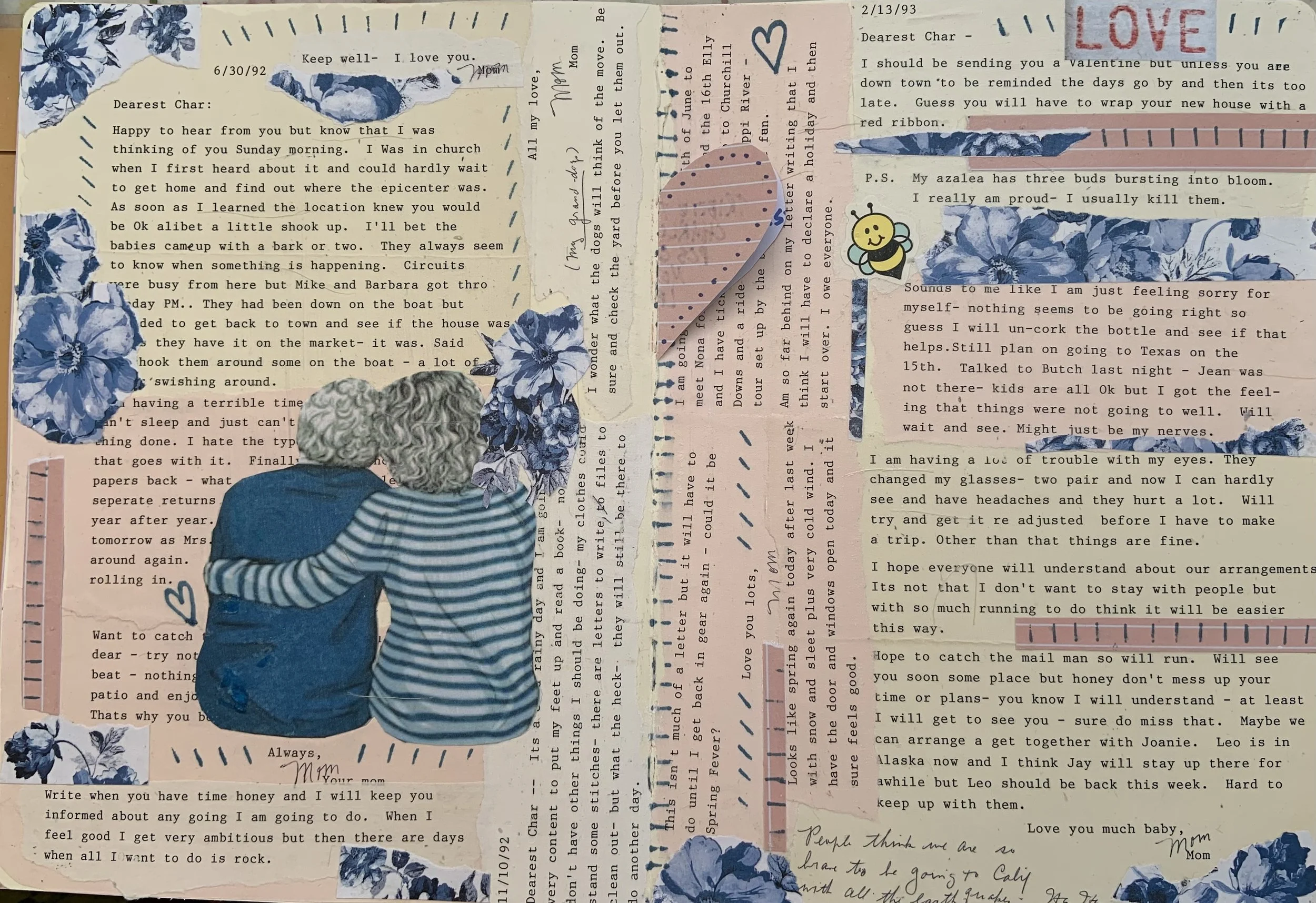
Laura Branch grew up with a green book on the shelf. Her mom started writing in it in college, a line or two whenever something happened that she wanted to remember, and she has kept it up for more than 50 years. First dates, first teeth, first days of kindergarten, and now her grandkids' moments are all in there.
Laura is my first guest from outside my own family. She spent 20 years in data science and AI before she left to start Garden Archive Press and make her own version of that book. We talked about why she made it on paper, what her memory keeping looks like with two boys and a full calendar, and why she thinks we can all go easier on ourselves.
10% off The Keeping Book with code POSTCARDS10. (I bought my own copy of The Keeping Book and don't earn anything from the discount code.)
Key takeaways
A line or two is enough. The Keeping Book has one page for every day of the year and no year printed on it. You add the year in the margin and write a sentence or two when something happens. The days with nothing to write just stay open.
It gets better as it fills. After 50 years, any page in Laura's mom's book holds decades of things that happened on that same date. She still opens it and tells the family what happened "on this day."
Paper holds the person, too. Laura compares it to her grandmother's recipe cards: the handwriting, the stains, the fact that she touched them. A password to a server doesn't hand that down.
What's worth keeping changes. When kids are little, there's a first every week. Later it might be a long conversation with your husband, or the first full book you've read in years. Those count.
Kids can help decide. Laura's boys, 8 and 11, now come to her with the days they think belong in the book. Not every Minecraft build makes it in.
Photos don't hold everything. Laura's favorite story about her son and a math problem involving Cheetos happened in the car, with no camera. It exists because her mom wrote it down.
Go easy on yourself. Laura's advice for newer parents: don't set a line for what counts as "enough." Be present in the phase you're in.
About Laura
Laura Branch is the founder of Garden Archive Press, an independent publishing house for family culture and legacy. Her first title, The Keeping Book, is an undated daily memory journal with one page for every day of the year, inspired by the memory book her mother has kept for more than fifty years. A painter, botanical illustrator, and writer, Laura spent two decades leading technical teams in data science and AI before founding the Press. She lives in Northern Virginia with her husband and two sons, where "It's a Keeping Book Day" is a regular household announcement.
-
Laura: We used to announce, or my mother used to announce — she still does — "It's a green book day," all the time. Anytime something happens, if somebody says something funny, if something memorable, even sad, like something bad or good would happen, she would say, "Oh, it's a green book day." And eventually we started calling that out, too. And now my kids are at the age where they will be like, "I think it's a green book day, Mama. Listen to what happened."
Maddie: Hey, welcome to Postcards for Posterity. Make the memories, keep the story. I'm Maddie, and this show is for moms and anyone who takes the pictures and holds the stories in their families but doesn't want to miss their life while trying to document it.
Maddie: I'm so excited to have you here today, Laura. It's been such a treasure getting to know you and your product, so I'm looking forward to diving into that today. To open it up, could you introduce yourself and a little bit about your background?
Laura: I'm Laura Branch. I am the founder of Garden Archive Press. I'm an ex-corporate executive, so I spent 20 years in a career that the last 15 of it was data science and AI and all things sort of government data related.
But I'm a creative at heart. I'm an artist and a writer, and I just have all of this creativity and all these things that I want to create inside of myself, so there was always a disparity there. And so recently I stepped away, and I've started this publishing company. And I'm a mom of two boys. They're eight and 11, and I live in Virginia.
Maddie: Could you just give a brief overview of what your product is before we go into it? Because I'm very excited about it.
Laura: Garden Archive Press as a brand — there's a lot of things that I want to produce through it, but the main goal is basically to get people to see that your ordinary life, your everyday life, is so valuable and so worthy of documenting, capturing, keeping, and passing on to future generations.
Our first product is called The Keeping Book. It is basically an undated memory journal. There's one page for every day of the year, but there's no year assigned. So there's a column to the left side of every page that lets you add the year, and then you're supposed to write just one or two lines whenever something happens that you want to remember.
It's not a journal in the sense of you're going to sit and write for a long time with all of your thoughts. You're literally just jotting down, "This is what happened, and here's two or three things about it that I want to remember," so that when you go back in the future, it can lead you to that memory, but it doesn't describe it completely. That's our first product.
Maddie: And you said you spent your career in data science and AI, and you're also an artist. How did those two sides of you lead to The Keeping Book? Especially in a day where AI is big, and I feel like there's so many products that are digital AI products.
Laura: I have two opposing answers to this. There was definitely an aspect of that career where I always felt a little bit like I was faking it. Because on the inside I'm such a creative, and I had to be so serious on the outside and so analytical, it always felt like there was this piece of me that was missing that I wasn't able to bring to the table.
And on the flip side, data science and AI are not as non-creative as you might think. In data science, I spent a lot of time talking to people about what data do you have available, and then presenting them with a list of, "Here are some outside-of-the-box things that you could do with that data that are interesting." And so there's some creativity there, but I always knew I'm missing a big part of myself.
I got into my 40s and I was like, "Okay, this is a ladder that I'm good at climbing, but it's a ladder I don't really want to be on. So how can I take my business experience and apply it somewhere that means more to me, that comes a little bit more naturally?" The Keeping Book actually comes from something that my mother kept my whole childhood, and I've always wanted to do something with that.
I just love paper products and school supplies and books. I thought, "You know what? I'm going to go ahead and try to produce this book and show the world what this is and how powerful it can be for your family, and see if I can have fun and build myself a new career in the process."
Maddie: It's so important to have tangible memories that are accessible. That's something that I have been looking at so often — where can I offload this into something that's actually usable and it's not just on my phone? Sometimes it's easier to jot down things in the notes app or whatever resource people are using.
But then when it's especially a family memory or archive or things like that, I'm not going into other people's phones to see and read about those things, right? It's kind of your own personal thing. And so being able to make it accessible and tangible and available — and I love that it's undated so you can really write in where you're at, and memories from that day.
And like you said, documenting those ordinary everyday moments too, I think, is just really special. And frankly, I don't have a lot of time to journal. Or maybe I do, but I choose to watch Netflix or something instead. At the end of the day I'm like, "I really need to change my night routine."
But I also just appreciate that you can go back and fill it in when you have that time, or set aside that time to do it, and it doesn't have to be a daily thing.
Laura: Nobody has time to journal. Don't be hard on yourself about that.
Maddie: I used to be so good at it.
Laura: Before kids?
Maddie: Before kids, yeah.
Laura: Me too. And now it's fun occasionally when I can sit down. The kids are getting a little bit older, so I do have a little bit more time now. There's a place for that, of course.
There's a level of guilt about I haven't been journaling, or I haven't finished the baby books, or I haven't whatever, that I always feel when I look at those, and I just think we should all let that go.
Maddie: I agree. There's so many things you can do, and the things that my mom has saved for me, or some of the things that I said — those are all special. And I think sometimes we have so many memories we want to remember and capture, it feels overwhelming, like we're not doing enough all the time, because we have all these photos and things. It's like, where do we put it now?
Laura: Or the things that happen that you don't have a photo of, because you're driving in the car when it happened, or that just happens too fast and you didn't know it was coming.
Maddie: Yeah. What was the moment you realized you wanted to build this? You kind of touched on it — but not just use something like it, but make it yourself.
Laura: Being a creative person is great, and also there are so many ideas all the time that sometimes it's really tempting to try to mush them all together into one thing, and then it just gets really complicated.
And I feel like that's what happened with my first try with a business. I was doing all the things all at once, and none of them were working very well, and I knew I needed to take a break. It just wasn't feeling right anymore. And so I was thinking, "What can I do that would be a really focused, clear, simple business, to take all the stuff that I've learned and really try to build something with a solid foundation?" And I have just had this idea in the back of my mind of The Keeping Book, like this little nagging idea for years.
What it looks like has changed, like how I would design it, but I have always wanted to create this as a product and put it out there. So I was sitting on my front porch. I remember the exact day. It was a hot day. Our porch faces west, and so I was sitting out there, and it was too hot. I was closing my eyes because the sun was so bright, and I just remember this feeling — the idea came into my head, and I just had this feeling of peace came over me that was like a yes. It was a full body, do that. Let's step away from all this chaos and let's do this thing that's very clear, that's very focused and straightforward, and that comes from such a genuine place.
I made the decision there. The rest is history.
Maddie: When I was first looking at this product, I was comparing it to what's on the market right now in other ways, like five-year journals. I feel like a big differentiator of this book is the intention of it. It's really for the family memories and to document those family memories. Anything in there is meant for that kind of more family consumption.
Laura: I built this to be like an heirloom. It's the kind of quality that I'm hoping lasts for generations, right? It'll look a little beat-up, which actually I prefer — I really like that. But it will last, so you can write these things down.
I'm coming at this from a place of my mom's been doing this for 50 years, so I know what the book looks like after 50 years, all the memories stacked up together. Any page that you turn to, decades of things in there. So it's not something every day, every year, but there are decades worth of memories. But to somebody who's brand new to it, it does feel like, we're just going to every once in a while jot something down.
It's hard to maybe picture what it will become, but it becomes more valuable over time the more you put into it, and you end up with almost these lists of just events that have happened or memories that you want to keep. And so that's the intention — that it is for the whole family, and it's like a full family experience putting it together.
And then when you look back, my mom's book is the most valuable thing in the whole family. It's the one thing we would grab if there was a fire.
Maddie: Can you speak to that experience a little bit more — where The Keeping Book originated from, and what your growing up was like with that?
Laura: So my mom is a list-maker. I always joke that she's the original data scientist. She will take information from anywhere. Any book you open in her house, there are just newspaper clippings and magazine articles that fall out that she's been tucking in there forever. So she's just an information gatherer.
And when she was in college, she had this little book. I think it was intended for birthdays. I think it says "Birthdays" on the front of it. And every day of the year has a few lines, so you could go in and write someone's name and the year they were born. But she used it for memories.
So she would write down, whenever something happened that she wanted to remember, she would jot down like, "First date with Jim," who's my dad. They met in college, right? All of their firsts are there. They bought their first house, when they got married. And then when they had me — I'm the oldest of two — so they had me, and all of my memories are in there: lost my first tooth, and took my first steps, and all the things that happened, like first day of kindergarten and all the way up through.
My sister was born, her things are in there. Now my kids' things are in there. She will open it every day, and she'll be like, "Did you know that today is the day that you started kindergarten, and the day that we saw your house for the first time, and the day that your son went to the grocery store for the first time?" Sometimes it's tiny random things, but she's like, "Hey, all these things happened on the same day." And it's just fun. It's like an archive of our entire life that's in this one book.
Maddie: As the book gets more filled out and you add more to it, on that day you're also seeing things that happened in previous years, making it even more valuable over time.
Can you speak more to the decision to make it more of a physical instead of a digital?
Laura: My dad, when I brought up this idea, was like, "You should make an app. You should turn it into a digital thing." And I just really in my heart felt like there may come a day when we put together some sort of accompanying app or something if people really want that.
But I just feel strongly, in the same way that I love boxes of my grandmother's old recipes, and I love to go through those. They're her handwriting. Some of them have stains on them. They're wrinkled, or some of them were given to her by other people. I can touch and feel those, and it's like a full experience. Some of them smell different ways, like vanilla or something.
You hand down a thing that I know that she has touched, that she wrote on, that she experienced. That's a different thing than like, "Here's my password to this server where I keep everything, and you can go and look through there if you want to. It's going to look exactly the same as everybody else's memories that are in there, because it's in the same font, and it's organized in the same way."
I just felt really strongly that I wanted something that felt good in your hands, that you could keep on the shelf, that you didn't have to open a screen to fill it out.
And also because I think when you are putting something into the digital world, which we all do all day long, right, there's almost an invisible filter that you're passing everything through of, what is appropriate for me to be putting into whatever environment? Or is anybody else ever going to see it? There's just this little hesitation, at least for me, that happens in my head where I'm like, "What am I going to write here, and how am I going to do it the right way?"
Whereas if it's a book, and it's my book, I don't have to worry that someone else is going to see it and have an opinion about it, or react to it, or find out something I don't want them to know. It's our book. It's just for the family. I don't have to show it to anybody else ever if I don't want to. So to me, it was just really important to have that physical, tactile experience and full ownership over what's inside of it.
Maddie: Yeah, I feel like especially if you're on social media, that's such a different audience that you're documenting for than for yourself or immediate family, and it sort of changes, like you said, that filter of what you're inputting and how you're writing, instead of the more authentic feeling.
Laura: Personal, yeah.
Maddie: Yeah, personal. A vulnerability. Sometimes that is not something you want to share with all of your 600 friends.
Laura: I would never want to have an app or something that is pinging you. You know how apps tend to — they want you to come back, they want you to keep using them, so it'll remind you and send you little pings. I don't want any input into it. I want it to sit on the shelf until I am ready to pick it up and use it. And sometimes that's every day, and sometimes there's a month between when I touch it, or more. And that's up to me, because it's mine.
Maddie: There's kind of a trend, too, of trying to get off the phone, get off the screens, and any opportunity to do that, and create that tangibility or remember something right before bed in an easy way, is really valuable and to help at the end of the day.
What does ownership over memories mean to you and even your family? How do you see that? And how does that maybe play into this?
Laura: When you say ownership, I think about two different things. There's literal ownership, which is a loaded word right now in the digital world. It's like, what do you own versus not own? All of my pictures live in Google Photos, right? If Google goes out of business, what happens to those? I don't know. I don't actually own those, unless I print them or put them somewhere else.
But I also think about the idea of owning the experience of creating those memories and documenting those memories. Because I know that I love it, even though I'm overwhelmed, even though I'm busy or tired or frustrated. I'll miss these days someday. So if you can think about, how do I want their childhood to feel? How do I want my home to feel?
And take ownership over, how do I want them to look at their own experience of life, and notice the things that mean something to them, and realize, "Hey, I want to keep this. I want to just tuck this in this book so it's there for later." And I think it's really important for us as adults to take ownership of that.
It's so easy for the years to pass, and you just aren't even paying attention to deliberately creating and then capturing those memories. And how am I going to hold onto those, and how am I going to pass those on to the future so they can see where they come from?
Maddie: I agree. It's another job of being a parent, which, like throughout our conversation we've said, can get overwhelming with all the things that you think you should do.
But even just doing something small — essentially you are the memory architect for them, especially as they are growing up. I think we're responsible to pass down those things. How are we creating our family stories and shaping how they think about essentially themselves in our families? I think that can be super powerful in terms of how they're identifying and their sense of belonging as well.
Laura: I also think we are in a time right now when the whole world is fighting for our attention, right? And it's so fast-paced and it's changing all the time, and it makes us all feel like this is what we should be doing. Even the journaling thing, even whatever it is — we're seeing someone else do it, we're seeing other people say we should be doing something, and it just creates this pace that is overwhelming and exhausting.
Our memories that were passed down to us from our grandparents and our parents and whoever are at risk, because there is so much determined by the algorithm right now, instead of us using our own sense of what we want to pass on, or sense of right and wrong, or values, or whatever it is.
So when I think about our home, I almost feel like I'm standing at the door of the house, holding out all of the influence from the outside world to protect what's inside the home. Because I want time to kind of slow down. I want people to walk in and be able to take a deep breath and their shoulders drop, and they can slow down and think their own thoughts and know their own mind and know where they came from. They can hear the stories that we tell them about our grandparents or our parents, or what it was like when we were growing up, and why we've passed down the traditions that we have, or which traditions are from generations ago and which ones did we make up for them or have just happened on their own.
They should know those things. And I feel like there are a lot of families who get buried under the digital pressure, and I think you're missing — you're losing something in that scenario.
Maddie: Totally agree with you. It's ever-increasing to try to protect that space and to create a safety that can be created through this family dynamic and through the stories and things that you do pass on.
What does your own memory keeping look like right now?
Laura: My memory keeping right now is sporadic. I am in the trenches with everybody else, with all of the sports and all the appointments and the schedules and the school events. I actually do tend to sometimes use a list on my phone. If I'm out somewhere and something happens and I think it's funny, I'll just jot something down in my notes app.
And then maybe it goes through different phases. Maybe once every week, every two weeks, my husband and I will sit down with the actual keeping book and write down what actually happened that we want to keep. Sometimes I keep it on my nightstand, and every night before bed I'll open it up and I'll write, if something happened, I'll write it down.
Sometimes it sits on my kitchen table, and actually I think that works better because we tend to be in the kitchen. When something happens, I can just grab it and take 20 seconds to write it down, and then it's there and I know I can check it off my list. So it's a little bit sporadic.
I definitely still take pictures, although less than I used to. I don't follow the kids around with a camera like I used to when they were little. So that's been an interesting change in phases lately. But there's so much that I want to hold onto, that I want to keep.
In spite of me saying we should let go of the guilt, I do always feel like I'm just barely keeping up with the memories.
Maddie: It is really hard.
Laura: It's really hard. I have a very cemented vision of what a keeping book looks like from my mom. We called it the green book growing up. Her book was green. And I have this very clear vision of what it looks like for our family, so I've never thought about it in any other way.
But it's interesting as more people are using it, and I'm hearing about how they're using it, different people do this in different ways. Some people feel like they want to write something every single day. Some people want to write more than just one or two lines. They want to write five or six lines and more details than I would add. But it's theirs. That's the beauty of it.
Some people focus entirely on their kids, and they want to keep this book just for memories about their kids. Some people don't have kids. There are some customers that are single — it's mostly women, single women who are keeping track of their lives even if they're in their 20s. These are the things that are meaning something to them in this phase of life right now. And I just think it's beautiful to see. That's the point, right?
It is a bit of identity formation and an identity expression. So I think that has been really beautiful to see, the way that different people use it.
Maddie: I remember when we initially connected and you were saying that you could use this book for years and years, because there's so many lines in it. And then when I was using it, I was like, I am not a brief two-line person. When I write down a memory, it's going to be five to seven lines, might be half the page. I'll have to get this book every few years or something. But I love that.
It's so adaptable based on what fits, what you feel like you need. And also I love that you're still figuring out your system. I think the keeping book is a constant, but as kids grow and develop, like you said, there's different things. You're not taking a photo of every single thing anymore.
Laura: When they're little, there are milestones all the time. They said this word and they never said it before, or they ate this food for the first time, or they took their first steps — there's all of these firsts.
But you get to a point where they're not having those firsts all the time. They're not having milestones anymore like that so frequently. So if you only write those things down, you're writing things down much less often. So it changes. What you want to keep changes. And sometimes it's like, hey, I had an actual long conversation with my husband today, and it was lovely, and I'm going to write that down, because we haven't done that in a long time. Or, I've read my first full book. That happened a couple years ago. I hadn't read a book in 10 years. First full book. I put that in there. It just changes, the things that you want to keep.
Maddie: I actually — this is a tangent — but I have been part of a book club for the past three, four years, and I was always on their text group, but I never actually went because I didn't have the time. And this year I was like, "I am going to finish these books and I'm going to show up," and that's my commitment each month, and I have been able to do it. And it's felt so good to talk to people about books. It's mostly audiobooks that I can do at this point. But yeah, I get that feeling of, it just feels so good to read a book.
Laura: That's like a milestone for yourself, right? You've gone through a different phase of life, and now this is an exciting thing to note.
And instead of first words that they're saying, I now have conversations with my kids that are really interesting that I want to write down. They ask questions that I didn't think they were thinking about yet. Even about — we'll talk about space and they'll start asking these really kind of existential big questions, and I'm like, "Man, you're really dialed in." And it's fun.
Maddie: You mentioned this, but with your boys being eight and 11 now, are there some other things that have changed in how you've approached memory keeping with them as they've grown up?
Laura: They participate now.
We used to announce, or my mother used to announce — she still does — "It's a green book day," all the time. Anytime something happens, if somebody says something funny, if something memorable, even sad, like something bad or good would happen, she would say, "Oh, it's a green book day." And eventually we started calling that out, too.
And now my kids are at the age where they will be like, "I think it's a green book day, Mama. Listen to what happened." And then they'll tell me whatever thing meant something to them that they want to hold onto, that they want to put into the book.
I think that's really beautiful. That tells me that I'm doing an okay job imparting that sort of life philosophy onto them, or that outlook where you're looking for things that you want to keep and remember and hold onto, rather than just letting that pass and forgetting things.
Maddie: I'm excited for that point when my daughter's going to actually participate.
Common advice is just to take a lot of pictures. I know that a lot of people have told me you will never regret how many pictures or videos you take. What's your perspective on that after 11 years with kids, and is that true? I don't know. What's your view of it?
Laura: I think pictures and videos are important. I have pictures from when I was a kid, and I love to look back at them. I also have boxes and boxes of photos — or I guess my parents do — of that time period, of people walking around taking pictures of random scenery that is beautiful in person that the picture never actually tells you.
And there's no context to go with it, and it is completely overwhelming to think about going through all of those pictures and figuring out which ones you want to keep. And we've got magnitudes more pictures of our kids than they took of us. I run out of space all the time on my photo server. They're always like, "You're out of space," because we do. We take a lot of pictures and videos.
It's really fun to be able to look back and see, how did they look, how did they move, what did their voice sound like? But there's no context for a lot of it. Unless you pull them out and you put together a photo album or a family yearbook, which is important — unless you do that, you don't have the memory that goes with it. You just have the image, and if they don't remember it, then they just see the toys that are in the picture with them or the background of the photo, and they don't know, why does that matter? Why is that special?
And then also as they get older — when they were babies, we were taking dozens of pictures every day, because you're just so excited. Now, we have to remind ourselves we haven't taken pictures in a while. We should probably record something. So that changes, too.
I'm not at all against tech and photos and videos. That's an important part of it. I just think there's so much that you lose if you only rely on pictures for your memories.
One of my favorite memories that I've talked about recently with my mom — I didn't have this in my keeping book, but she called me to remind me that this happened. I was talking to my four-year-old son in the car back when he was four, and I was trying to teach him math or something like that, and I had asked him, "Okay, if I have 10 Cheetos and you take 10 of my Cheetos, how many Cheetos do I have left?"
And he got the concept, but instead of just saying zero, he was so offended. He was like, "Oh, Mama, I would never take all of your Cheetos." He was so upset, and she thought it was so cute, and she wrote it down, right? I don't have a picture or a video of that. I was driving the car. How many moments happen like that, that you wouldn't remember, you wouldn't have a place to put that, if you didn't do something other than just relying on pictures?
Maddie: Such a cute story. Talking to a newer parent, or looking back, is there anything you would have done differently, or advice to do?
Laura: The best advice that I could give is try to not should all over yourself, right? Don't feel guilty about not doing enough, or not producing enough memories, or not taking enough pictures, or taking too many, or whatever it is. Don't set some sort of a line of, if I get to this line, I'm doing enough, and if I don't, then I'm off course.
Just be present and just soak it in, whatever that looks like. There are going to be good days and bad days, and that's part of the journey, and that's okay. And just go easy on yourself.
So I think if I could go back — I'm such a data head, I spend a lot of time trying to read articles and learn what is the optimum thing I should be doing with them at this age right now, and what are the milestones they should be hitting, and how can I help them? And very intense in my head about whatever was happening in their lives, and I think it would've probably turned out the same whether I did that or not. So I think just be present, whatever phase you're in, your family's in, and just try to go easy. That's my advice.
Maddie: I've found that there's so many different levels of where people's interests are and where they spend their time and energy. For me, memory keeping is something that I'm so excited about and I find joy in doing.
I remember before I became a mom, my sister-in-law — she is so good at doing hair. They have six kids now, and they have three girls, three boys. And she used to just sit down with them and do their hair every single morning. And beautiful bows, and she does hair now as a business. But I just remember thinking when I saw her doing that, I was so impressed, and I also had this thought, "I am not going to be that mom." That is not a skill that I have nor want to develop, and I just love that she has that skill. She's so creative at so many things.
I love memory keeping, but I recognize there are so many different levels of it, and I might be on the more extreme side, but I love that people approach it so differently, and it works.
Laura: Everybody has their own thing that resonates with them. You should follow your energy.
Maddie: Where can listeners find you and The Keeping Book? If you're able to see this on video, this is my copy. I love it, and I love the thickness of the paper and the quality. It really feels like an heirloom book that you can pass down.
Laura: You can find it at gardenarchivepress.com. We're at Garden Archive Press on Instagram and Facebook, and trying to do better about Pinterest. Come find us. Come join us.
Maddie: It's really been a pleasure to have this conversation with you, and I think it's going to be really helpful to a lot of people trying to navigate this memory-keeping process. I love The Keeping Book and everything it represents, so thank you for making this product and pursuing it and actually taking action on it.
Laura: I'm so happy to be here. This has been awesome. Thank you so much.
Maddie: Postcards for Posterity is connected to my Love, Maddily blog, and that's where I share additional resources, links, and freebies — ways for you to stay more connected to the memories and people in your life.
Links
The Keeping Book at Garden Archive Press: https://gardenarchivepress.com
10% off The Keeping Book with code POSTCARDS10
Garden Archive Press is on Instagram, Facebook, and Pinterest
Episode 9, where I talk about being your family's memory architect: https://lovemaddily.com/blog/pfp-becoming-the-memory-architect
The monthly letter
Want more ideas like this?
Get one letter a month with simple ways to keep your family's stories.
Get the monthly letter
Laura Branch on The Keeping Book, the family memory journal inspired by the one her mom has kept for 50 years.